




PRINT MATTERS 2026 CONCLUDES IN BUDAPEST WITH STRONG FOCUS ON TRANSFORMATION, SUSTAINABILITY AND RESILIENCE
9 June 2026
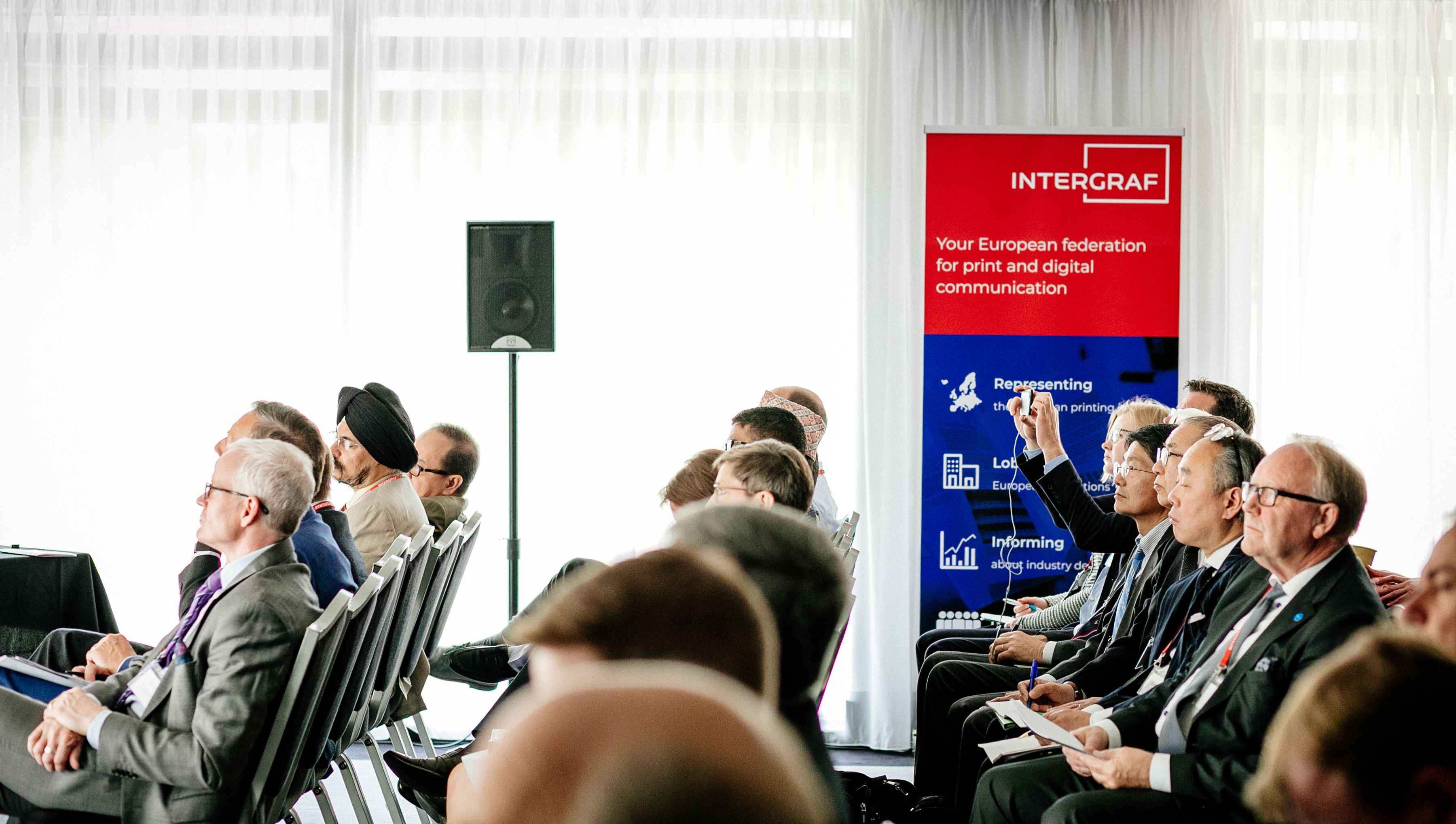
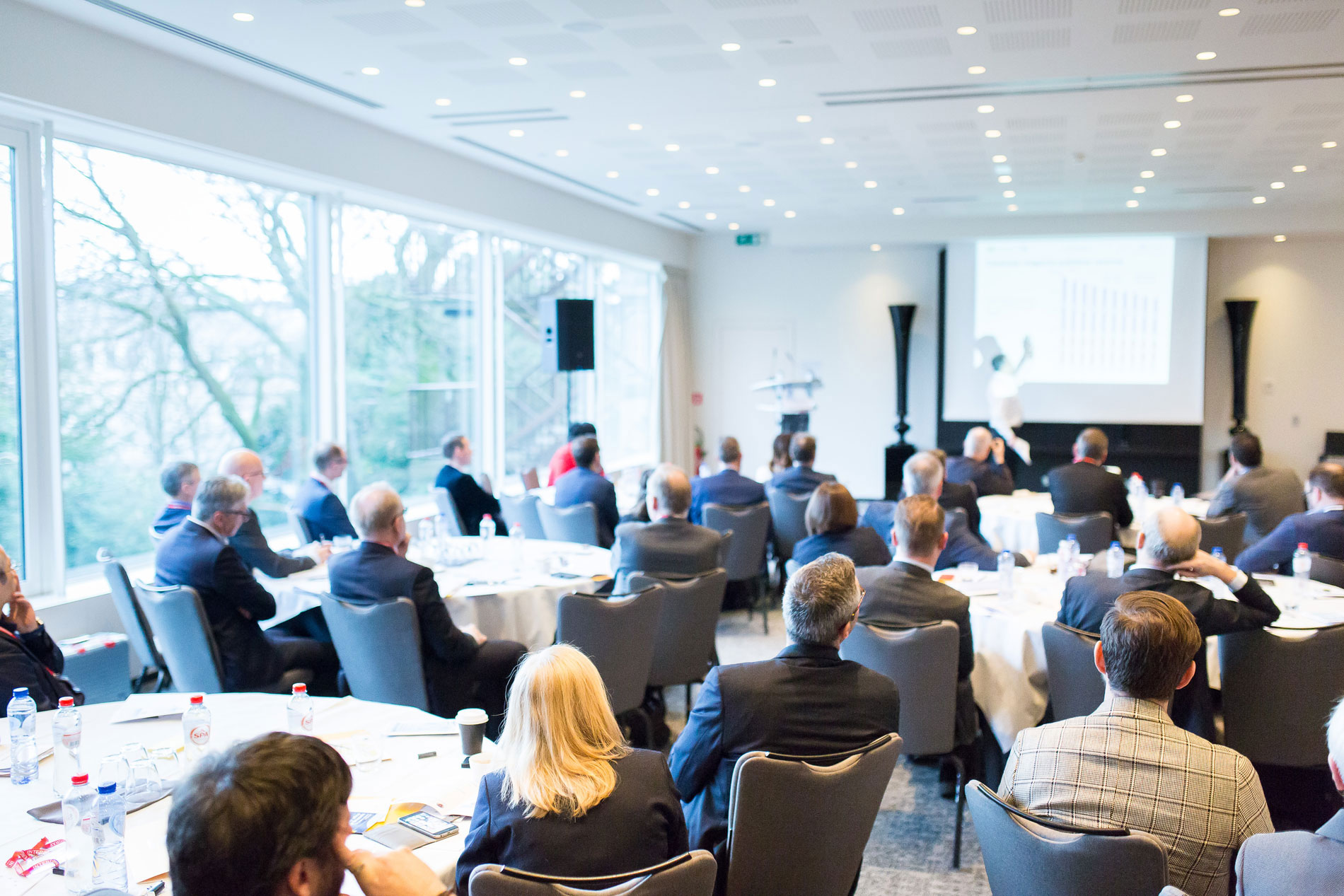
The latest edition of the Print Matters conference brought together printing industry leaders, national associations, suppliers, experts and stakeholders from across Europe and North America for a full day of strategic exchange.
Co-organised by Intergraf and Nordic Printing Association (NOPA), Print Matters 2026 took place on 5 June in Budapest, Hungary. The conference once again confirmed its role as one of the key annual meeting points for the European graphic industry, offering a platform to discuss the market, regulatory and technological developments shaping the future of print.
This year’s programme was structured around four central themes: business, economic outlook, sustainability and security. Across these sessions, speakers explored how printing companies can respond to changing customer expectations, new technologies, evolving regulation, supply chain pressures and the growing need for resilience. Print Matters 2026 showed that the printing industry is not standing still. From automation and artificial intelligence to sustainability reporting, risk management and business continuity, the discussions highlighted a sector that is actively adapting, investing and preparing for the future.
The conference was opened and closed by Ulrich Stetter, President of Intergraf, and Håvard Grjotheim, President of NOPA.
The Business Matters session opened with Árpád Keskeny of Keskeny és Társai printing house, who presented the company’s growth journey in a changing market. His presentation underlined the importance of long-term vision, investment and adaptability in maintaining competitiveness in a demanding business environment.
- Roman Zenner, e-commerce expert from Agentic Punks, then explored the emergence of agentic commerce and its potential implications for printing companies. His presentation offered a forward-looking perspective on how artificial intelligence, digital commerce and automated decision-making may reshape customer behaviour and create new opportunities for print.
- Irina Pinta, Young Talent Award Winner 2026, brought the voice of the next generation to the stage with a presentation on the opportunities for print in a hyper-personalised future. Her contribution highlighted the creative potential of print in an age of personalisation, data-driven communication and changing consumer expectations.
The Economic Matters session provided a broader view of market developments. Ford Bowers of PRINTING United Alliance shared insights into the US print market, offering delegates an international perspective on current trends, challenges and opportunities.
- Emanuele Bona, Vice President Europe at Pulp and Paper Products Council (PPPC), addressed developments in the global paper market, outlining the factors influencing supply, demand and market stability.
- Mark Boyt of Keypoint Intelligence concluded the session with a presentation on automation and robotics, showing how new technologies can support productivity, efficiency and competitiveness while helping companies respond to labour and skills challenges.
Sustainability was a central focus of the afternoon programme. Laetitia Reynaud, Senior Policy Advisor at Intergraf, provided a clear and practical overview of EU legislation affecting printers, helping delegates better understand the regulatory landscape and what it means for companies in practice.
The sustainability session continued with a panel discussion on the future of CO₂ calculation, moderated by Charles Jarrold, CEO of British Printing Industries Federation (BPIF). The panel brought together Zane Blūma of Livonia Print, László Szabó Bencző of Infopress Group and Tamas Unger of DONECK Network. The discussion addressed customer expectations, supply chain transparency, carbon data, sustainability reporting and the practical steps companies are taking to reduce their environmental impact. A key conclusion was that meaningful progress requires reliable data, closer cooperation between printers and suppliers, and a shift from sustainability as a compliance exercise to sustainability as a driver of value and competitiveness.
The final session, Security Matters, focused on resilience in an increasingly uncertain environment. Emil Knieszner of ANY Security Printing presented a case study on risk assessment and business continuity in the security printing sector. He underlined the importance of structured governance, risk management, cybersecurity, human expertise and responsible AI use in protecting business-critical operations.
The conference concluded with a powerful real-life case study from Steffen Höntsch of VTT, who shared how the company responded after a devastating fire destroyed its production facilities. His presentation demonstrated the importance of preparation, clear responsibilities, emergency planning, stakeholder communication, IT recovery, insurance and temporary production solutions. It offered a compelling reminder that resilience begins long before a crisis occurs.
Print Matters 2026 concluded with a clear message: the printing industry is facing profound change, but it is also equipped with the expertise, creativity and determination needed to move forward. The discussions in Budapest showed a sector focused on practical solutions, stronger collaboration and long-term competitiveness.
A media kit containing selected images of the event and other branded material can be downloaded by clicking here. More information about the Print Matters 2026 conference can be found here.
The next Print Matters conference will take place on 4 June 2027 in Tallin, Estonia.
The conference was kindly sponsored by the KURZ Group & Agentic Punks and supported by Federation of Hungarian Printers and Papermakers (FEDPRINT).
See the press release in .pdf here.
{K2Splitter}