






10. Print protects security and data
Physical nature, advanced security features, and independence from digital vulnerabilities make printed products a trusted and essential part of Europe’s safety, privacy, and democratic infrastructure.
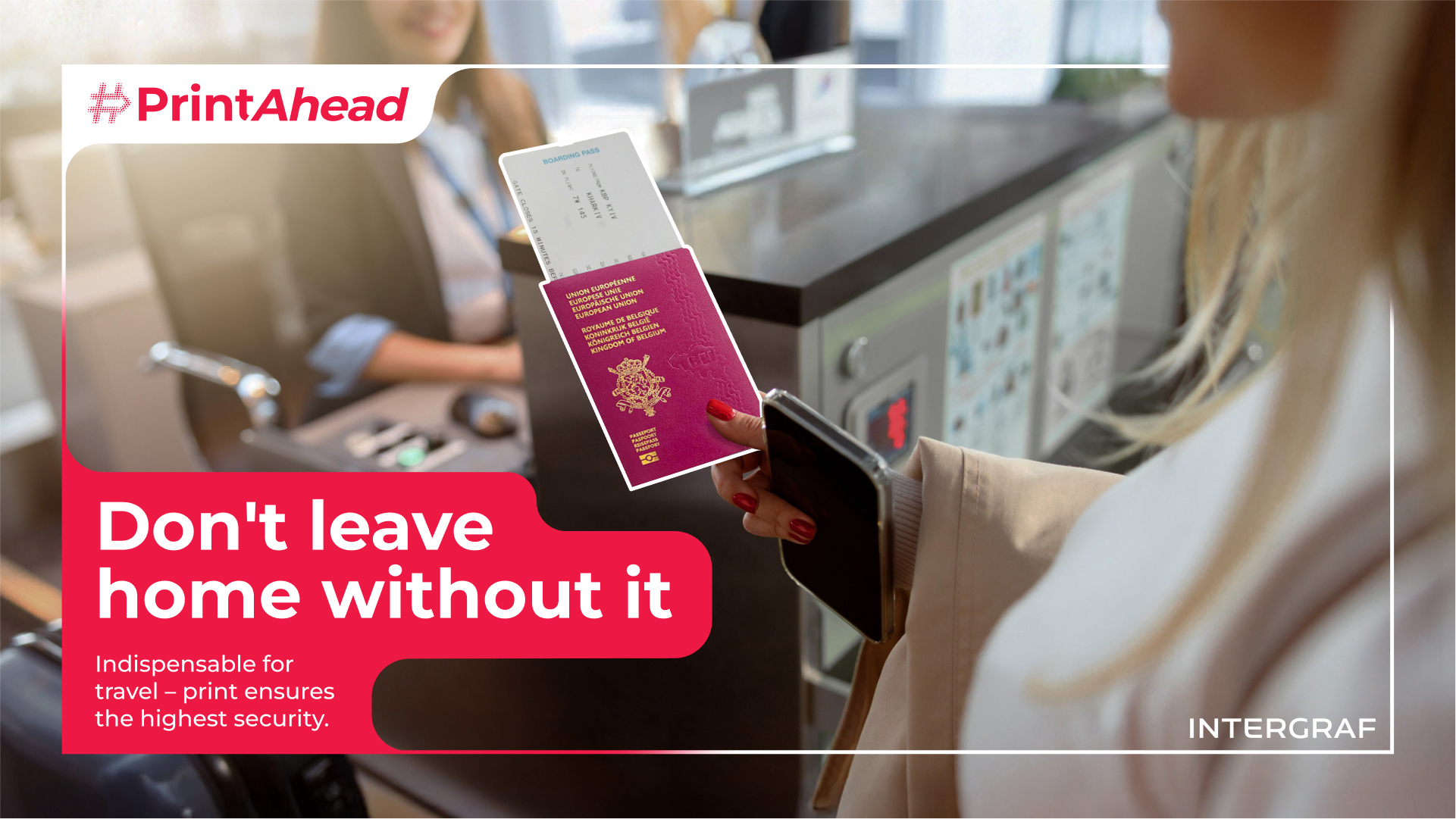
- Security printing plays a vital role in safeguarding individuals, institutions, and entire societies. By integrating advanced security features such as complex patterns, holograms, specialised inks, and biometric identifiers, printed documents like passports, ID cards, certificates, banknotes, and other official records are strongly protected against forgery and counterfeiting. These techniques help secure personal identities, protect sensitive information, and maintain the integrity of essential documents. Security printing not only ensures authenticity but also strengthens public trust in government authorities, border systems, and financial institutions. As digital risks grow, these physical safeguards remain an essential line of defence.
- Many sectors rely on printed documents to uphold safety, privacy, and security standards. Banking institutions use physical records for identity verification and fraud prevention. Health and medical services depend on printed prescriptions, labels, and patient documentation to ensure accuracy and reduce risk. Public administrations, tax authorities, police forces, and local authorities use printed certificates, forms, and notices to maintain trusted, traceable communication with citizens. Banknotes — one of the most widely used printed products — guarantee financial independence by allowing payments without relying on electricity, internet access, or digital devices.
- Cybersecurity is an increasing concern across Europe. More than half of EU citizens (56%) report being worried about cyber-attacks and cybercrime, including identity theft, data breaches, ransomware, and phishing attempts (EPRS, 2022). This concern is even higher among people with higher education levels (64%), compared with 54% of those who finished school between ages 16 and 19, and 39% of those who left school at 15.
- Because printed documents exist physically and cannot be hacked or remotely altered, they offer inherent security advantages. Consumers recognise this: 71% express concerns about having their personal information stored electronically, and 73% believe that keeping hard copies at home is a safer and more secure way to store sensitive information (Two Sides, 2018).
- Children represent one of the most vulnerable groups in the digital environment. Across the EU, 93% of citizens believe that children must be better protected online, as they face growing exposure to cyber risks from an increasingly early age (EPRS, 2022).
- Concerns extend to educational technologies as well. An analysis of 163 ed-tech products recommended during the COVID-19 pandemic found that 89% could monitor children both inside and outside school hours (UNESCO, 2023). Privacy issues have led some regions to restrict or ban certain digital tools altogether. For example, several German states have prohibited Microsoft products that fail to comply with GDPR requirements.
- Security-printed documents, by contrast, provide a stable, privacy-respecting alternative that does not track, record, or expose personal behaviour.
- Together, these factors underline why printed documents remain indispensable. Their physical nature, advanced security features, and independence from digital vulnerabilities make them a trusted and essential part of Europe’s safety, privacy, and democratic infrastructure.