






8. Print communicates effectively
Print is effective in reaching target groups to communicate information.
- Neuroscientific research shows that physical media consistently outperform digital formats in how people process, remember, and respond to information (Canada Post, 2015). Physical media require 21% less cognitive effort to process and generate far higher brand recall — 75% for print compared with 44% for digital — making printed content easier to engage with and remember.
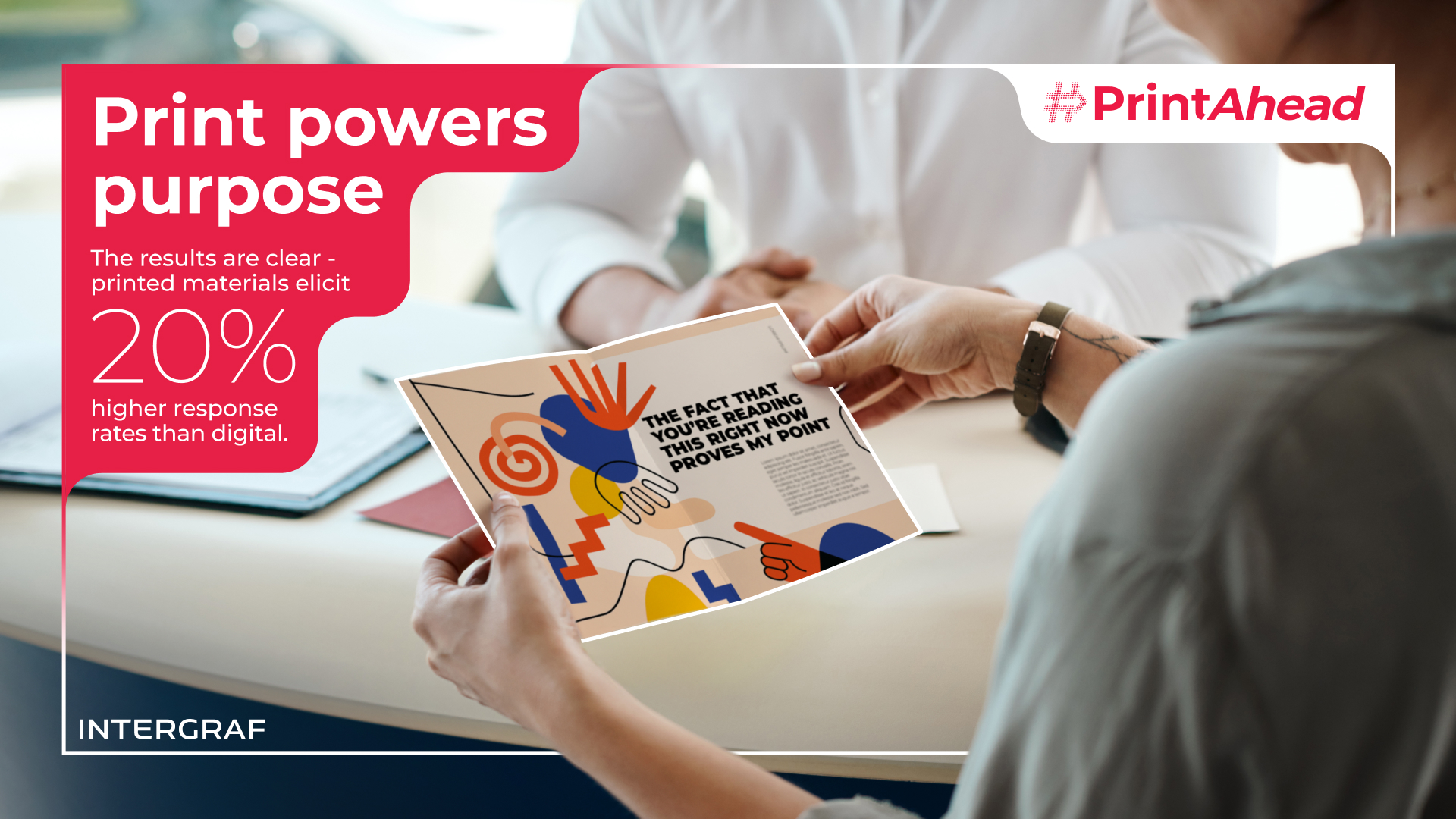
Motivational responses are also significantly stronger when people interact with physical media. A 2–5% difference is usually enough to predict future behavioural change; physical media score 20% higher than digital, indicating an exceptionally strong effect. This deeper engagement is reflected in visual processing as well: direct mail is processed more quickly than digital content. Digital material triggered longer attention times on key elements such as price, product, and logo (3.119 milliseconds on average), compared with 2.261 milliseconds for physical media.
When assessing the relationship between motivation and cognitive load which is a strong predictor of whether someone will take action, physical mail again stands out. Direct mail exceeds the crucial motivation-to-cognitive load threshold of 1, reaching a ratio of 1.31. Digital media fall below this benchmark at 0.87, showing that printed communication is more likely to drive real-world behaviour. - Printed leaflets remain a vital tool for helping small businesses reach local audiences and can even increase online purchasing. Research by Triverdi et al. (2019) shows that QR codes effectively steer consumer intention when used strategically: they enhance engagement with low-involvement products when paired with an emotional message, and they support high-involvement purchases when combined with informational content. This demonstrates how print can amplify digital interaction and support omnichannel communication.
- Although internet access across Europe ranges from 75% to 98%, regional disparities remain significant (EPRS, 2022). Northern and North-Western Europe report the highest access rates at 94–98%, compared with 89–91% in Central and South-West Europe and just 75–87% in the South and East. Broader digital participation also shows inequality: in 2021, 8% of the EU population had never used the internet — a sharp decline from 26% in 2011. Among older adults aged 55–74 and those with lower levels of education, the share rises to about 20% (EPRS, 2022).
- Because learning, comprehension, and information retention are consistently stronger when reading on paper, printed products remain essential communication tools. They ensure that vital information is accessible, memorable, and inclusive regardless of age, digital skill level, or regional connectivity.